
 by
If you have ever wondered what is prayer, you are asking one of the oldest and most important questions in the Christian faith. At its simplest, what is prayer? It is talking with God — honestly, openly, and in your own words. It is not a ceremony for experts, a magic formula, or a test you can pass or fail. Prayer is a conversation with a loving Father who already knows your heart and still delights to hear your voice.
This guide explains prayer in plain language: what the Bible says it is, the different types of prayer, why Christians pray, how to begin, and what prayer actually does in your life. Whether you are exploring faith for the first time or returning to prayer after years away, you will find clear answers here — with Bible verses and practical examples throughout.
What Is Prayer? The Simple Definition
Prayer is communication with God. The classic definition, given in the Westminster Shorter Catechism, describes it as “an offering up of our desires unto God, for things agreeable to his will, in the name of Christ, with confession of our sins, and thankful acknowledgement of his mercies.” In everyday language: prayer is speaking to God and listening for Him in return.
Prayer can be spoken aloud or completely silent. It can be a few words whispered on a busy train, or a long, quiet conversation in the early morning. It can be joyful praise, honest confession, simple thanks, or a desperate cry for help. All of it counts as prayer, because prayer is not defined by the words you use — it is defined by who you are speaking to.
The Bible describes prayer in many beautiful ways: “pouring out the soul before the Lord” (1 Samuel 1:15), “drawing near to God” (Psalm 73:28), and “seeking unto God and making supplication” (Job 8:5). Each of these pictures tells the same story. Prayer is a real person turning toward a real God — a Father who is personal, who listens, and who answers.
That is an important point. Prayer only makes sense because God is personal. If God were a distant force or an impersonal power, talking to Him would be pointless. But the Bible presents God as a Father who knows His children by name, who cares about the details of their lives, and who invites them to come to Him freely. Prayer is the way that relationship is lived out, day by day.
It is also worth saying what prayer is not. Prayer is not a performance. You do not need beautiful language, a special voice, or years of practice. God is not grading your grammar. He is listening to your heart. A short, honest prayer — “Lord, help me” — is worth far more than a long, empty one, because, as Jesus taught, your Father knows what you need before you ask (Matthew 6:7–8).
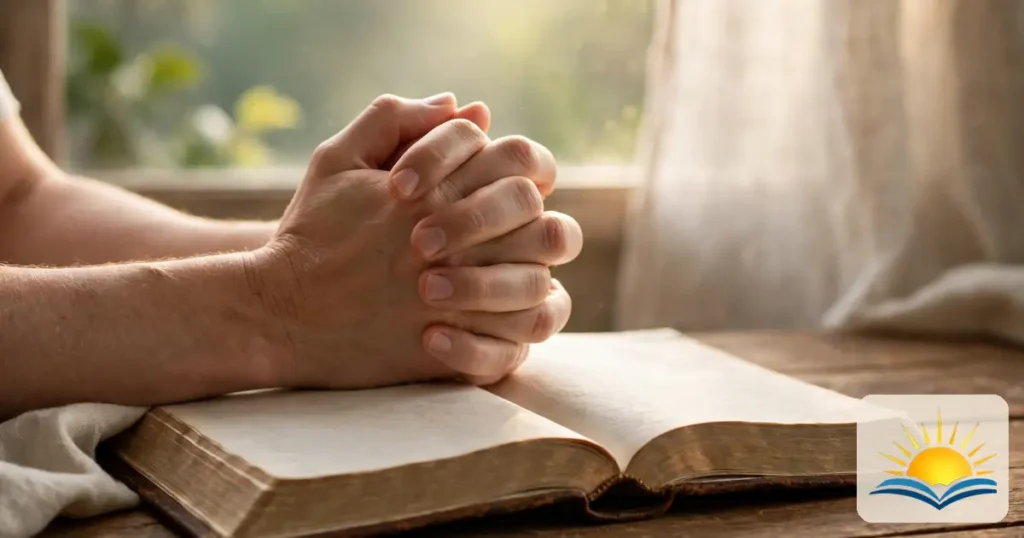
What Does the Bible Say About Prayer?
The Bible talks about prayer from its first pages to its last. In the Old Testament, the patriarchs prayed directly to God, Moses interceded for the people of Israel, and the Psalms give us 150 prayers — songs of praise, lament, thanksgiving, and trust — that believers still pray today. Hannah prayed silently in her heart, with no audible voice, and the Lord heard her (1 Samuel 1:13). Daniel prayed three times a day, even when it was dangerous to do so (Daniel 6:10).
In the New Testament, Jesus prayed often and at length. He slipped away to lonely places to pray (Luke 5:16), prayed before important decisions, and prayed in the Garden of Gethsemane on the night before the cross: “Not my will, but yours be done” (Luke 22:42). Jesus taught His disciples to address God as Father, gave them the Lord’s Prayer as a model, and told them to ask in His name. The early church prayed together constantly — in homes, in the temple, and in times of danger (Acts 2:42).
The Bible also gives us clear teaching about how prayer works. Paul writes, “Do not be anxious about anything, but in every situation, by prayer and petition, with thanksgiving, present your requests to God. And the peace of God, which transcends all understanding, will guard your hearts and your minds in Christ Jesus” (Philippians 4:6–7). Prayer brings peace — not because it magically fixes every problem, but because it places our worries in the hands of a God who cares.
The Bible is honest, too, about unanswered prayer. God sometimes says “not yet,” and sometimes gives something better than we asked. The apostle Paul prayed three times for a painful difficulty to be removed, and God’s answer was that His grace was sufficient (2 Corinthians 12:8–9). Prayer is not a technique for controlling God. It is a request made by children to a Father who is wiser than they are.
If you would like to explore the prayer Jesus taught in more depth, our guide to where the Lord’s Prayer is in the Bible — https://blessedmorningprayer.com/where-is-the-lords-prayer-in-the-bible/ — walks through Matthew 6:9–13 line by line.

The 5 Main Types of Prayer
Prayer takes many forms, but most prayers fall into five main types. The Bible uses all of them, and you will find them woven through the Psalms and the prayers of the New Testament. They are often remembered with the simple pattern ACTS — Adoration, Confession, Thanksgiving, Supplication — with intercession as a form of supplication for others.
1. Adoration — praising God for who He is. Adoration is worship. It is telling God that He is great, holy, loving, and faithful — not because He needs to hear it, but because our hearts need to say it. “Great is the LORD and greatly to be praised; his greatness is unsearchable” (Psalm 145:3). Adoration puts everything else in perspective: when we start by remembering who God is, our problems shrink to their proper size.
2. Confession — admitting our sins honestly. Confession is agreeing with God about where we have gone wrong. The promise is clear: “If we confess our sins, he is faithful and just and will forgive us our sins and purify us from all unrighteousness” (1 John 1:9). Confession is not about shame; it is about freedom. A heart that has been honest with God is a heart at peace.
3. Thanksgiving — thanking God for what He has done. Thanksgiving is gratitude spoken aloud. We thank God for forgiveness in Christ, for daily provision, for the people in our lives, and for answered prayers. Being specific makes thanksgiving stronger: “Thank You for the strength to get through yesterday” trains your heart to notice God’s hand in ordinary days far better than a general “thank You for everything.”
4. Supplication — asking God for what we need. Supplication is simply asking. Jesus told His followers to ask, seek, and knock (Matthew 7:7), and Paul urges us to present our requests to God about everything (Philippians 4:6). Nothing is too small or too large to bring to God — a job interview, a sick child, a decision about the future. We ask boldly, and we trust the wisdom of the Father with the answer.
5. Intercession — praying for others. Intercession is praying on behalf of someone else. It is one of the most loving things you can do. The Bible commands it — “pray for one another” (James 5:16) — and Paul’s letters are full of prayers for the churches he loved. Be specific when you intercede: “Lord, give Sarah peace before her hospital appointment on Thursday” is stronger than a vague “bless Sarah.” Keep a short list of names and pray through two or three of them each day.
You do not have to include all five types in every prayer. On some days your whole prayer may be thanksgiving. On others, it may be one desperate request. Both are real prayer.

Why Do We Pray?
People pray for many reasons, but the Bible points to several purposes that go far deeper than simply getting things from God.
Because God invites us to. Prayer is not something we force on a reluctant God. The Father Himself loves us and invites us to come (John 16:27). Prayer is a family privilege — children talking with their Father. The door is already open because of what Jesus did on the cross, and we can approach God’s throne of grace with confidence (Hebrews 4:16).
Because prayer changes us. This is one of prayer’s deepest works. Prayer bends our will toward God’s will, not the other way around. When we pray honestly, our anxieties give way to peace, our anger softens, our gratitude grows, and our trust deepens. As the old saying goes, prayer is like a sailor setting a sail to the wind: the wind does not change, but the boat is brought into its power and direction. Prayer aligns our hearts with God’s purposes.
Because God has ordained asking as a real means. Prayer truly moves God to act. The Bible teaches that some things God gives only when His children ask (James 4:2). Our asking does not control God — His purposes stand firm — but He has chosen to work through the prayers of His people, and He delights to answer them.
Because we need help we cannot give ourselves. Life brings situations beyond our strength: illness, grief, fear, temptation, and decisions we cannot see clearly. Prayer is where we admit our need and receive strength, wisdom, and comfort. “God is our refuge and strength, an ever-present help in trouble” (Psalm 46:1).
Because prayer builds relationship. Like any relationship, our relationship with God grows through conversation. The more we speak to Him and listen to His Word, the better we know Him. Prayer is not an emergency service; it is the daily conversation of a living friendship.
When life feels heavy and you need strength to keep going, our prayer for strength — https://blessedmorningprayer.com/a-prayer-for-strength/ — can give you words to pray when your own run short.

How to Pray: A Simple Way to Begin
If you have never prayed before, beginning is easier than you think. You do not need a special place, special words, or a perfect moment. Here is a simple way to start.
Find a quiet moment. You do not need a church building. A quiet corner of your flat, a park bench on your lunch break, or your car before you head into the office will do. Put your phone on silent, take a breath, and remember that God is with you.
Address God directly. Most Christians begin with “Heavenly Father,” “Lord,” or simply “Father” — the way Jesus taught His disciples to pray. Pick the opening that feels most natural to you, and use it until it becomes comfortable.
Speak honestly. Tell God what is true. Praise Him for one thing, admit where you have gone wrong, thank Him for something specific, and ask for what you need. Use your own words, exactly as you would speak to a trusted friend — because that is what prayer is.
Listen. Pause for a moment. Read a few verses of Scripture and let them shape what you say next. Prayer is a conversation, and conversation includes listening.
Close with confidence. Most Christians end with “in Jesus’ name, Amen.” Praying in Jesus’ name is a reminder that we come to God through Him, and “Amen” means “so be it” — I mean this, and I trust God with it.
That is all a prayer needs. For a fuller step-by-step guide, including the ACTS pattern and a five-minute daily routine, see our beginner’s guide to how to pray — https://blessedmorningprayer.com/how-do-i-pray/

What to Say When You Pray
“What should I say?” is the question almost every beginner asks — and it is also the question that worries people the most. The honest answer is that you can tell God anything. The Psalms are full of joy, grief, anger, fear, and thanks, all spoken openly to God. Nothing you feel is off limits.
Still, a simple structure helps, especially when your mind wanders. The ACTS pattern has guided Christians for generations:
– Adoration — praise God for who He is: His love, faithfulness, and power.
– Confession — admit your sins plainly and receive His forgiveness.
– Thanksgiving — thank Him for specific blessings, large and small.
– Supplication — ask for what you and others need, boldly and specifically.
You can also pray using the Lord’s Prayer as an outline. When the disciples asked Jesus, “Lord, teach us to pray,” He gave them these words (Matthew 6:9–13): “Our Father in heaven, hallowed be your name. Your kingdom come, your will be done, on earth as it is in heaven. Give us today our daily bread. Forgive us our debts, as we also forgive our debtors. And lead us not into temptation, but deliver us from the evil one.” Each line can be turned into your own prayer, and the whole thing takes less than two minutes.
And when you have no words at all, short prayers are enough. “Lord, help me.” “Father, I am scared.” “God, thank You.” The tax collector in Jesus’ parable prayed a single line asking for mercy, and Jesus said he went home right with God (Luke 18:13–14). You can also pray a psalm — Psalm 23, Psalm 46, or Psalm 121 read slowly are wonderful starting points — or simply sit in silence. Silence is not wasted time; it is listening.

When and Where Can You Pray?
The short answer is: anywhere, at any time. The Bible shows people praying in every setting imaginable — in the morning, at noon, and in the evening (Psalm 55:17); in the temple and in the desert; alone in a room and together with friends; in joy and in grief. There is no place too ordinary and no hour too inconvenient for prayer.
In the morning. Many Christians begin the day with prayer, following David’s example: “In the morning, LORD, you hear my voice; in the morning I lay my requests before you and wait expectantly” (Psalm 5:3). A short morning prayer sets the direction of the whole day. Our collection of good morning prayers — https://blessedmorningprayer.com/good-morning-prayers/ — is a good place to start if you want simple words to begin with.
Through the day. Paul’s instruction to “pray without ceasing” (1 Thessalonians 5:17) does not mean speaking non-stop. It means living in continual awareness of God’s presence — a quick prayer on your commute, a word of thanks over lunch, a sentence of trust before a difficult meeting. These small, frequent prayers weave God into the fabric of an ordinary day.
In the evening. Evening prayer is a time to look back: to thank God for the day, to confess where you fell short, and to entrust the night and tomorrow into His hands. Many families pray together before bed, and many believers find that a short evening prayer brings deep, restful sleep.
With others. Praying together is powerful. Jesus said, “Where two or three gather in my name, there am I with them” (Matthew 18:20). Pray with your family, your friends, or your church — even a short prayer together can bring great comfort and encouragement.
In hard times. Prayer is not only for quiet moments. The Bible is full of prayers cried out in crisis — from the depths of suffering, in danger, in illness, and in grief. When words will not come, remember that the Holy Spirit prays for us when we cannot: “The Spirit himself makes intercession for us with groanings which can’t be uttered” (Romans 8:26). God hears even the prayer you cannot speak.

What Prayer Is Not: Common Misconceptions
Because prayer is so widely practised, it is also widely misunderstood. Clearing away these misconceptions will free you to pray with confidence.
Prayer is not a magic formula. There are no words that force God to act. Repeating a phrase a certain number of times, or using exactly the right wording, does not make a prayer “work.” Jesus warned against piling up empty phrases, because your Father knows what you need before you ask (Matthew 6:7–8). Sincerity matters; formulas do not.
Prayer is not a last resort. Many people only pray when everything else has failed — as if prayer were the emergency service you call when nothing else works. The Bible presents prayer the opposite way: as the first response, not the last. Prayer is the atmosphere in which everything else is done, which is why Jesus taught that we “must always pray and not give up” (Luke 18:1).
Prayer is not a shopping list. It is true that we ask God for things, and He delights to provide. But prayer that is only asking misses most of what prayer is: worship, thanksgiving, confession, listening, and simply enjoying God’s company. A friendship that only ever asks for favours is a poor friendship.
Prayer is not only for “holy” people. You do not need to clean yourself up before you come to God. The whole point of prayer is that you come as you are — messy, doubtful, tired, and imperfect — and God receives you because of Jesus, not because of your performance. The tax collector who prayed, “God, have mercy on me, a sinner,” went home justified (Luke 18:13–14).
Prayer is not a one-way monologue. Prayer includes speaking, but it also includes listening — through Scripture, through quiet reflection, and through the gentle guidance of the Holy Spirit. If your prayers feel like talking into the dark, try spending a few minutes in silence after you speak, and a few minutes reading a psalm before you speak. You may be surprised by what you hear.

How Prayer Changes You
Prayer changes things — but its first and deepest work is changing the person who prays. This is something the Bible teaches again and again, and it is the testimony of Christians across the centuries.
Prayer brings peace. When we hand our worries to God in prayer, His peace guards our hearts and minds (Philippians 4:6–7). The circumstances may not change immediately, but the fear loosens its grip. Many believers can point to a moment when prayer turned panic into calm, even before the situation improved.
Prayer builds trust. Every answered prayer — and every season of waiting faithfully — deepens our confidence in God. Keeping a prayer journal, where you write requests down, date them, and note when God answers, is one of the strongest builders of faith there is. Looking back over answered prayers reminds you that God has been faithful before, and He will be faithful again.
Prayer softens the heart. Praying regularly for others — especially for people you find difficult — changes the way you see them. Compassion grows, bitterness shrinks, and you begin to see people the way God sees them. Intercession is as much a gift to the person praying as to the person prayed for.
Prayer gives strength and wisdom. “If any of you lacks wisdom, you should ask God, who gives generously to all without finding fault, and it will be given to you” (James 1:5). Prayer is where we receive strength for the day’s work, courage for hard conversations, and wisdom for decisions we cannot see clearly. David testified, “When I called, you answered me; you greatly emboldened me” (Psalm 138:3).
Prayer brings joy. Jesus told His disciples to ask so that their joy would be complete (John 16:24). There is a deep, quiet joy in knowing that the God who made the universe listens when you speak — and in discovering, day by day, that He is near.
None of this happens overnight. Prayer is a habit, and habits grow slowly. But five honest minutes a day, most days, will do more for your spiritual life than an hour once a month. Start small, keep going, and let prayer do its quiet work in you.

Frequently Asked Questions About Prayer
What is prayer in simple words?
Prayer is talking with God. It is speaking to Him honestly in your own words — praise, thanks, confession, and requests — and listening for Him in return. You do not need special words or a perfect voice. A short, sincere prayer is real prayer.
Why do we pray if God already knows what we need?
God does know what we need before we ask (Matthew 6:8), but He still invites us to ask. Prayer is not about informing God; it is about relationship. A child tells a loving parent what they need not because the parent does not know, but because talking builds closeness. Prayer also changes us, aligns our hearts with God’s will, and is the means God has chosen to give many of His gifts.
What are the 4 types of prayer?
The four classic types of prayer are adoration (praising God), confession (admitting sins), thanksgiving (expressing gratitude), and supplication (asking for needs). Intercession — praying for others — is often added as a fifth type. Together they are remembered with the ACTS pattern: Adoration, Confession, Thanksgiving, Supplication.
How do you pray to God for the first time?
Find a quiet place, address God as “Heavenly Father,” and speak honestly in your own words about what is on your heart. Thank Him, ask for what you need, and close with “in Jesus’ name, Amen.” Your first prayer can be as short as one sincere sentence — there is no special formula, and God delights to hear your voice.
Does God answer all prayers?
God hears every prayer from His people, but He does not answer every prayer with “yes.” Like a wise Father, He sometimes says “yes,” sometimes “not yet,” and sometimes gives something better than we asked. The Bible shows that answered prayer is linked with faith, humility, obedience, and submission to God’s will — and that even when the answer is “no,” God’s grace is sufficient (2 Corinthians 12:8–9).
A Final Word
So, what is prayer? It is the simplest and most wonderful privilege of the Christian life: talking with God, your loving Father, honestly and regularly, in your own words. It is not a performance, a formula, or a last resort. It is a conversation — and it is open to you right now, wherever you are.
You do not need perfect words. You need only a willing heart and a few quiet minutes. Start today, start small, and keep going. The God who made you is listening, and He delights to hear your voice.
Ready to make prayer part of every morning? Visit blessedmorningprayer.com — https://blessedmorningprayer.com/ — and explore our collections of morning prayers, Bible blessings, and short prayers to start your day with God — one honest prayer at a time.